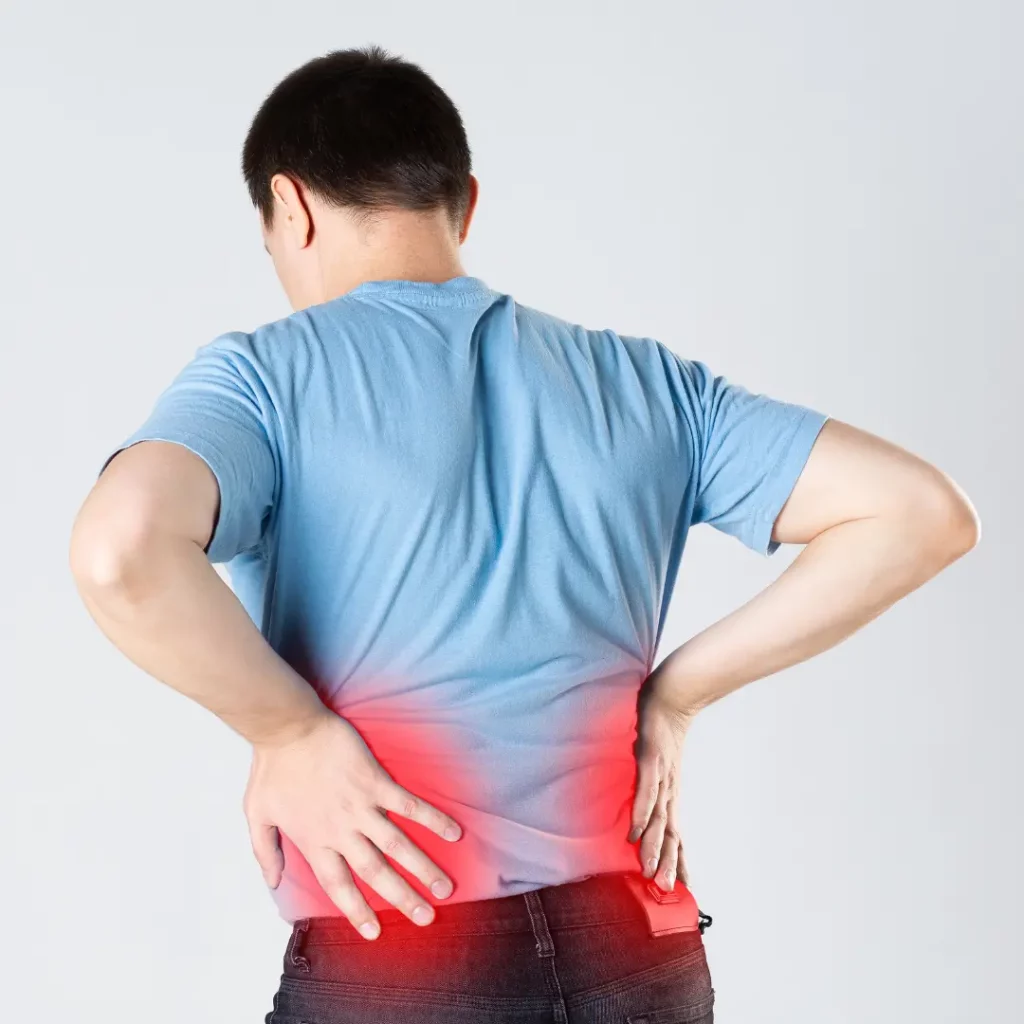
Nocturnal sciatica is not a distinct diagnosis, but a way of presenting radicular pain that worsens when lying down or even wakes the patient. In many cases, it still fits with typical sciatica, but when the pattern changes, sleep is repeatedly interrupted, or neurological signs appear, it is advisable to expedite the assessment. Understanding what that pain means at night helps avoid trivializing it, but also helps not to panic unnecessarily.
- Nocturnal sciatica may be compatible with a common lumbar radiculopathy.
- Not all leg pain at night implies urgency, but the pattern matters.
- If the pain wakes you up, progresses, or changes, it needs to be reevaluated.
- Loss of strength, sphincter alteration, or saddle anesthesia are warning signs.
- Neurological examination remains as important as MRI.
- Treatment can be conservative, infiltrative, or surgical depending on the cause.
What is Nocturnal Sciatica and Why Does It Occur?
Nocturnal sciatica is a practical expression to describe pain that runs through the buttock, thigh, leg, or foot and is particularly noticeable at the end of the day, when lying down, or during the night. In medicine, it is more accurate to talk about lumbar radicular pain, that is, pain caused by irritation or compression of a nerve root in the lumbar spine. Radiculopathy is the set of symptoms and signs that appear when that nerve root does not function normally.
That the pain is more noticeable at night does not automatically mean that the injury is more serious. Often, the maintained posture, decreased distractions, local inflammation, stiffness after hours of rest, or difficulty finding a position that relieves the nerve influence it. In other people, nocturnal sciatica appears because the radicular pain has been sensitizing the nervous system for some time, and any change in position triggers the symptom.
The most common causes remain the same as in daytime sciatica: lumbar disc herniation, lumbar stenosis or narrowing of the canal, arthrosis with narrowing of the holes through which the nerve exits, synovial cysts, and, less often, other lesions that compress the root. The relevance of nocturnal pain is not only its intensity but whether the pattern fits with mechanical radiculopathy or if it starts to resemble inflammatory, tumoral, infectious, or different neurological pain.
In other words: nocturnal sciatica can be an expected manifestation of an irritated nerve root, but it can also be the clue that forces a review of the diagnosis if the pain stops behaving as expected. That is why the clinical context is as important as the word “sciatica”.
Symptoms and Warning Signs of Nocturnal Sciatica
The central feature is leg pain of radicular distribution, often in the form of burning, shooting, stabbing, or electric shock, which can worsen when lying down, turning in bed, or sitting up. In typical nocturnal sciatica, the pain usually follows a recognizable path and is sometimes accompanied by tingling or a feeling of tightness that changes with posture.
What makes this picture worthy of quick assessment is not only that it appears at night but that the pattern stops being the usual one. It should be more concerning when the pain:
- Wakes you up repeatedly and does not allow you to go back to sleep.
- Is new or clearly different from previous episodes.
- Increases over a few days or weeks.
- Is accompanied by weakness when walking, climbing stairs, or lifting the foot.
- Is associated with progressive numbness.
- Worsens with intense lumbar pain, fever, weight loss, or a history of cancer.
- Is accompanied by problems urinating, defecating, or controlling sphincters.
It is advisable to distinguish between nocturnal pain that bothers and nocturnal pain that changes nerve behavior. The first can fall within common sciatica. The second forces consideration of more significant compression, persistent inflammation, or alternative diagnoses that should not be overlooked.
A useful clue is the evolution. If leg pain only appears when lying down but allows walking, working, and moving the back relatively normally during the rest of the day, it is usually less concerning. If, on the other hand, nocturnal sciatica coexists with increasingly limiting daytime pain, sustained loss of sleep, and neurological symptoms, the assessment should be expedited.
How Nocturnal Sciatica is Diagnosed: Examination and Imaging Tests
Diagnosis begins with a good medical history, which is the medical interview aimed at understanding when the pain started, how it is distributed, what worsens it, what relieves it, and whether there are relevant antecedents. Then comes the neurological examination, which assesses strength, reflexes, sensitivity, gait, and maneuvers that put tension on the nerve roots. In many cases, this combination guides more than any isolated image.
Lumbar magnetic resonance imaging is the most useful imaging test when nocturnal sciatica is intense, persistent, atypical, or accompanied by neurological deficits. It allows visualization of discs, nerves, the lumbar canal, and soft tissues. However, an MRI with degenerative findings does not always explain the pain. Many people have protrusions, dehydrated discs, or arthrosis without that being the real cause of their symptoms.
A x-ray can be useful to see alignment, instability, scoliosis, or fractures, but it does not show nerve compression well. Computed tomography is more precise for bone and can complement MRI in certain cases. Electromyography, a test that studies the function of the nerve and muscle, can help when there are diagnostic doubts, persistent symptoms, or discordance between clinical and imaging findings.
In the context of nocturnal sciatica, the goal is not to “request tests for the sake of it,” but to answer specific questions: is there a compressed nerve root?, what level is affected?, is there objective weakness?, is there a cause that requires faster action? The image should be interpreted alongside the examination, not in isolation.
Non-Surgical Treatment Alternatives
Most episodes of sciatica improve without surgery, and this can also be true when the pain is more intense at night. Conservative treatment usually combines measures to control pain, regain mobility, and reduce nerve irritation. The key is that the plan is active and guided by clinical evolution, not by absolute rest.
Initial measures usually include analgesics and, in some cases, anti-inflammatories, always considering the risk profile for digestive, renal, and cardiovascular issues. Neuropathic pain medications may also be considered in selected scenarios, although not all patients benefit equally. The choice of medication depends on the intensity of the pain, age, other diseases, and tolerance.
Physical therapy and therapeutic exercise are often important pillars once the pain allows it. It is not about “enduring” without moving, but about regaining control, tolerance to postures, and functional capacity. Sleeping better often also requires adjusting postural habits, improving ergonomics, and finding resting positions that do not increase tension on the nerve root.
Epidural injections with corticosteroids can play a role when radicular pain is intense, limits sleep, and does not respond sufficiently to initial treatment. Their goal is not to cure the mechanical cause but to reduce inflammation and facilitate a recovery phase. The benefit is usually clearer in the short term than in the long term.
In nocturnal sciatica, it is also important to review the context: if the pain worsens significantly when lying on your back, on your side, or when changing position, it may help to try positions that relieve the spine. Still, prolonged rest is usually not the best solution. Classic studies and modern guidelines discourage turning the bed into the main treatment.
Surgical Alternatives
Surgery is considered when nocturnal sciatica is part of a well-documented nerve compression and the pain or functional deficit is not controlled with reasonable conservative measures, or when there is progressive neurological deficit. The indication does not depend only on how much it hurts at night but on the combination of clinical, examination, and imaging findings.
The most common intervention for symptomatic lumbar disc herniation is microdiscectomy, which involves removing the disc fragment that compresses the nerve root using a minimally invasive technique or minimal aggression depending on the case. When the cause is lumbar stenosis, a decompression or laminectomy may be necessary to give space to the nerve. If there is associated instability, in some patients, fusion is also considered.
Surgery is not proposed because an MRI “looks bad,” but because the clinical-radiological correlation is convincing and the functional impact is real. In general, sciatica surgery aims to relieve radicular pain and improve function; relief from nocturnal pain is often one of the first changes that some patients notice when the nerve is no longer compressed.
In people with persistent pain, recurrences, or symptoms that do not fit with simple sciatica, surgery also serves a diagnostic and therapeutic function: to confirm the source of the problem and resolve the compression when it exists. Still, not all leg pains benefit from surgery, and that is precisely why the indication must be individualized.
Benefits, Risks, and Adverse Effects
The main benefit of a well-chosen strategy is to regain sleep, mobility, and quality of life. In nocturnal sciatica, sleeping better is not a minor detail: insufficient rest worsens pain perception, reduces exercise tolerance, and hinders recovery. Therefore, relieving nocturnal pain can have a very relevant functional effect.
Non-surgical treatments have fewer immediate risks, but they are not innocuous. Anti-inflammatories can cause digestive, renal, or cardiovascular problems; some neuropathic pain medications can produce drowsiness, dizziness, or a feeling of confusion; injections can cause transient pain, increased glucose in diabetic individuals, or, rarely, more serious complications.
Surgery offers, in well-selected cases, a more direct decompression of the nerve and often a faster improvement of radicular pain. But it also carries risks: infection, bleeding, cerebrospinal fluid leakage, persistence of symptoms, recurrence of the hernia, or the need for reoperation. No technique guarantees a perfect result, and the benefit must be weighed against the expected evolution without surgery.
An important point is not to attribute all nocturnal sciatica to a single structure. If the pain does not improve as expected, the diagnosis should be reconsidered: the nerve root may not be the only responsible party, or there may be more than one simultaneous cause. This review avoids repeated treatments that do not resolve the underlying problem.
Referral Criteria to Specialist
Referral to a spine or neurosurgery specialist is more reasonable when nocturnal sciatica is accompanied by one or more of these situations: intense pain that does not respond to initial treatment, persistence beyond several weeks, repeated relapses, clear sleep impairment, limitation in walking or working, or objective neurological signs.
It is also advisable to refer earlier if there is weakness, because strength usually does not improve on its own if the nerve root remains damaged. The feeling that the leg “gives out,” the foot trips, it is difficult to stand on tiptoes, or stability is lost when walking are reasons not to delay the assessment.
Another reason to expedite the consultation is the discordance between pain and expected findings. For example, very intense, progressive nocturnal sciatica or with repeated awakenings should not be treated as a simple nuisance if there are also histories of cancer, fever, trauma, immunosuppression, or unexplained weight loss. In these scenarios, referral is not only useful: it may be essential.
The reference specialty usually decides whether conservative treatment is sufficient, whether further imaging studies are needed, whether an injection is advisable, or whether surgery offers a favorable benefit-risk ratio. The correct decision is not “to operate or not to operate” in the abstract, but to define the next safest and most effective step for that specific case.
Realistic Recovery Times
Times depend on the cause, the intensity of the pain, the presence of neurological deficits, and the type of treatment. In nocturnal sciatica due to mild or moderate radicular irritation, improvement may begin in days or weeks, but it is not always linear. It is common to sleep poorly for a few days and then notice a gradual trend toward improvement.
With conservative treatment, many people regain functionality within several weeks, although residual pain at the end of the day or at night may take longer to disappear. In cases with marked inflammation, injections may offer quicker partial relief, but that relief is not always definitive.
After a microdiscectomy or decompression, relief from leg pain can be relatively quick, but a complete return to routine takes time. The patient usually goes through a phase where the leg improves before the rest of the feeling of “being completely well.” It is normal for sleep to recover before the confidence to move without fear.
Realistic recovery does not mean forcing or waiting passively. It means adjusting expectations: some symptoms resolve quickly, others take longer, and a few require reevaluation if they stagnate. In nocturnal sciatica, the evolution of sleep is often one of the best clues to know if the treatment is going in the right direction.
When to Go to the Emergency Room
There are situations in which nocturnal sciatica stops being a problem to schedule and becomes an emergency. The most important is the appearance of problems urinating or defecating, loss of control of sphincters, or anesthesia in the genital, perineal, or “saddle” area. A new and progressive weakness of the leg or foot is also significant.
Urgent attention should be sought if the pain is accompanied by fever, chills, general malaise, a history of cancer, significant recent trauma, inability to walk, sudden loss of strength, or very intense nocturnal pain that does not resemble previous episodes. In these cases, it is not advisable to wait to “see if it passes.”
The presence of nocturnal sciatica alone does not always imply an emergency, but if combined with neurological symptoms or systemic data, it may indicate severe compression or a non-mechanical cause that needs rapid treatment. When in doubt, it is better to have an early assessment than unnecessary waiting.
Myths and Realities
Myth: “If it hurts more at night, it must be something serious”
Reality: not always. Nocturnal sciatica can worsen due to posture, inflammation, and lack of distraction. What matters is to assess whether the pain maintains the typical pattern or if it changes in a concerning way.
Myth: “If I can sleep a little, it can’t be serious sciatica”
Reality: many radiculopathies allow for some sleep and can still be significant. What guides is not just sleeping or not sleeping, but the trend, intensity, and associated symptoms.
Myth: “An MRI with a herniation always explains the pain”
Reality: not necessarily. There are frequent findings in people without pain. Nocturnal sciatica should correlate with the examination and the exact way the symptom is distributed.
Myth: “If the pain goes down the leg, surgery is always required”
Reality: most sciatica improves without surgery. Surgery is reserved for cases with persistent disabling pain, clear compression, or progressive neurological deficit.
Myth: “Absolute rest is the best for nocturnal sciatica to go away”
Reality: prolonged rest usually delays recovery. The most useful thing is to stay active within tolerable limits and adjust treatment according to evolution.
Frequently Asked Questions
Does nocturnal sciatica mean I have a herniated disc?
Not always. A herniated disc is a common cause, but there can also be lumbar stenosis, foraminal arthrosis, or other causes of radicular pain. The clinical picture and examination help refine the origin.
Why does sciatica hurt more when I lie down?
When lying down, the loads and position of the spine change. Some nerve roots become more irritated with certain positions, and at night, pain is perceived more because there are fewer distractions.
Is it normal for sciatica to wake me up every night?
It can occur in radiculopathy, but if it happens frequently, it should be evaluated. When sleep is persistently interrupted, the quality of rest and clinical evolution deserve review.
What sleeping position helps most with nocturnal sciatica?
There is no universal position. Many people tolerate sleeping on their side with their legs slightly bent or on their back with support under their knees better, but the ideal is to individualize according to which position reduces pain.
When is an MRI requested for nocturnal sciatica?
It is usually requested if the pain is intense and persistent, if there is neurological deficit, if the evolution does not fit with common sciatica, or if there are warning signs that require searching for a specific cause.
Can nocturnal sciatica improve without surgery?
Yes. Many improve with conservative treatment, physical therapy, and time. Surgery is reserved for specific situations where the expected benefit clearly outweighs the risks.
What is the difference between muscular pain and radicular pain at night?
Muscular pain is usually more localized and mechanical. Radicular pain tends to follow a nerve path and may be accompanied by tingling, burning, or weakness.
Does lack of sleep worsen nocturnal sciatica?
Yes. Poor sleep increases sensitivity to pain and hinders recovery. Therefore, treating nocturnal sciatica also involves trying to protect rest.
Glossary of Medical Terms
- Nerve root: segment of the nerve that exits the spinal cord and can be compressed or irritated in the spine.
- Radiculopathy: alteration of a nerve root that can cause pain, tingling, loss of sensitivity, or weakness.
- Sciatica: pain that radiates along the path of the sciatic nerve, usually from the lumbar area or buttock to the leg.
- Magnetic resonance imaging: imaging test that shows in detail discs, nerves, and soft tissues.
- Lumbar stenosis: narrowing of the vertebral canal or tunnels through which nerves pass.
- Microdiscectomy: surgery to remove the fragment of disc that compresses a nerve root.
- Neurological deficit: loss of strength, sensitivity, or reflexes caused by involvement of the nervous system.
- Epidural injection: injection of medication into the epidural space to reduce inflammation and radicular pain.
- Saddle anesthesia: loss of sensitivity in the perineal or genital area, an important warning sign.
- Neurological examination: physical examination that assesses strength, sensitivity, reflexes, and gait.
References
- NICE. Low back pain and sciatica in over 16s: assessment and management. 2020. https://www.nice.org.uk/guidance/ng59
- NICE. Recommendations for adults aged over 16 | Suspected neurological conditions: recognition and referral. 2019. https://www.nice.org.uk/guidance/ng127/chapter/Recommendations-for-adults-aged-over-16
- NICE. Spinal metastases and metastatic spinal cord compression. 2023. https://www.nice.org.uk/guidance/ng234/chapter/Recommendations
- AANS. Herniated Disc. 2023. https://www.aans.org/patients/conditions-treatments/herniated-disc/
- AANS. Sciatica. 2024. https://www.aans.org/patients/conditions-treatments/sciatica/
- Mayo Clinic. Sciatica: Diagnosis and treatment. 2025. https://www.mayoclinic.org/diseases-conditions/sciatica/diagnosis-treatment/drc-20377441
- Cochrane. The effects of surgical treatments for individuals with ‘slipped’ lumbar discs. 2024. https://www.cochrane.org/evidence/CD001350_effects-surgical-treatments-individuals-slipped-lumbar-discs
- Cochrane. Non-steroidal anti-inflammatory drugs for low back pain with sciatica. 2024. https://www.cochrane.org/evidence/CD012382_non-steroidal-anti-inflammatory-drugs-low-back-pain-sciatica
- PubMed. Surgical versus non-surgical treatment for sciatica: systematic review and meta-analysis of randomised controlled trials. 2023. https://pubmed.ncbi.nlm.nih.gov/37076169/
- PubMed. Lumbar spinal stenosis and surgical decompression affect sleep quality and position in patients. 2024. https://pubmed.ncbi.nlm.nih.gov/39776675/
- PubMed. Does the presence of radiculopathy affect sleep quality and lower extremity functionality in neuropathic low back pain?. 2023. https://pubmed.ncbi.nlm.nih.gov/37729372/
- PubMed. Cauda equina, conus medullaris and syndromes mimicking sciatic pain: WFNS spine committee recommendations. 2024. https://pubmed.ncbi.nlm.nih.gov/38496349/
Note: this content is for educational and informational purposes only and does not replace the assessment, diagnosis, or treatment by a qualified healthcare professional. If you have any symptoms, consult a doctor.
If symptoms persist or worsen, the most prudent thing is to request an evaluation with a spine specialist, who can assess your specific case and guide you on the most appropriate options.